The Uncomfortable Truth About Success Nobody Likes to Admit
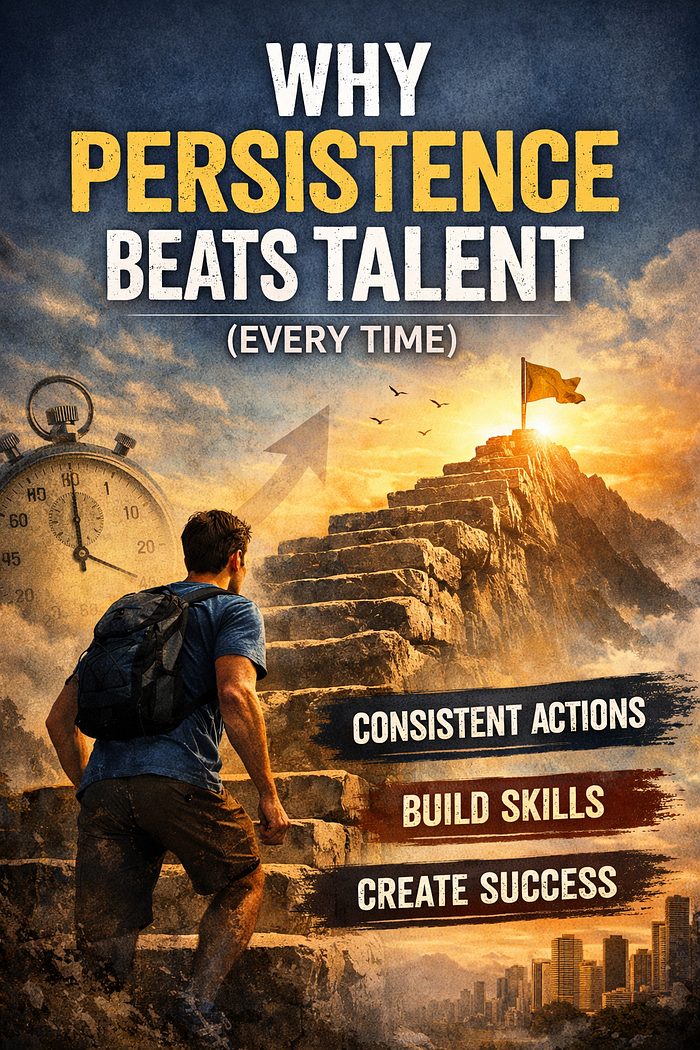
We love the story of the “natural.” The person who seems to win effortlessly — smooth on camera, sharp with words, always confident, always ahead. It’s inspiring… and also misleading. Because in most real-world success stories — especially in entrepreneurship and online business — the deciding factor isn’t brilliance. It’s staying power.
Talent can give you a head start. Persistence is what carries you to the finish line.
Talent is a spark. Persistence is the engine.
Talent is often potential. It’s what you could do. Persistence is what you actually do, repeatedly, long enough for results to show up. That matters because most meaningful outcomes are delayed outcomes: the audience grows slowly, the skills sharpen gradually, and trust is earned over time.
In other words, persistence isn’t glamorous — but it’s powerful. It turns “maybe” into measurable.
What research says about sticking with it
Psychologist Angela Duckworth popularized the concept of grit, describing it as perseverance and passion for long-term goals. Across multiple contexts, grit has been linked to achievement and performance — essentially supporting the idea that sustained effort matters a lot.
Meanwhile, research on expert performance shows something similar: high performance is strongly tied to deliberate practice — focused, goal-oriented repetition over time. In other words, skill isn’t just something you “have.” It’s something you build through consistent training.
And when it comes to the psychology of learning, Carol Dweck and colleagues have shown that people who view ability as developable (a growth mindset) are more likely to persist through difficulty, treat setbacks as information, and keep improving.
Put those together and a clear theme emerges: persistence fuels improvement, and improvement creates results.
Persistence works because it creates compounding effects
A lot of people quit not because they “can’t do it,” but because progress feels invisible at first. Persistence matters because outcomes compound.
- • You post consistently → you learn what resonates.
- • You practice consistently → your quality improves.
- • You follow through consistently → people begin to trust you.
- • You repeat consistently → your process gets easier.
This is also why habits matter. In one well-known habit-formation study, researchers found it takes far longer than people assume to make a behavior feel automatic — an average of 66 days, with wide variation between individuals. That means many people quit right before the habit becomes easier.
Persistence isn’t just “trying harder.” It’s staying long enough for the process to start carrying you.
“But what about talent?”
Yes — talent and traits matter in some contexts. But here’s the key: talent is not fully in your control. Persistence is.
Persistence is the great equalizer. It allows someone who started late, felt awkward, or lacked confidence to catch up — then surpass — people who relied on a head start and stopped training.
In online business especially, the winners are rarely the loudest or most gifted on day one. They’re the ones who kept showing up, improved publicly, learned from feedback, and didn’t disappear during the boring middle.
Why most people stop (and how persistence bypasses it)
Most people quit for predictable reasons:
- They expect fast validation.
- They confuse discomfort with failure.
- They rely on motivation instead of structure.
- They interpret setbacks as a verdict.
Persistence beats all four because it reframes the experience:
- • No validation yet? Keep building.
- • Discomfort? That’s skill forming.
- • Motivation low? Follow the plan.
- • Setback? That’s data.
A practical persistence system you can actually follow
Persistence isn’t an emotion. It’s a set of behaviors you repeat even when you don’t feel like it. Here’s a simple framework that makes persistence more likely:
1) Shrink the task until it’s undeniable
If you can’t do an hour, do ten minutes. If ten minutes feels heavy, do two. Persistence starts with lowering the barrier to entry.
2) Track effort, not just outcomes
Outcomes lag. Effort is immediate. Track: posts published, messages sent, skills practiced, lessons learned.
3) Build feedback into your routine
Treat failure as information: “What did I learn?” “What will I adjust?” This is how persistence becomes progress.
4) Set a non-negotiable streak
A short daily streak is more powerful than occasional intensity. Choose something you can keep even on hard days.
5) Decide your “minimum viable day”
Define what counts as “showing up” when life is messy. When your standard is clear, you don’t negotiate with yourself.
Persistence changes your identity
One of the biggest benefits of persistence is internal: it turns you into a person who finishes.
And finishers don’t just get better results — they get a different relationship with themselves. They trust their word. They don’t panic when things get slow. They don’t quit when the novelty wears off. That identity becomes a competitive advantage.
Summary: Persistence is how ordinary people build extraordinary outcomes
Talent can open a door. Persistence walks you through it, then keeps going when the hallway gets long.
Research across grit, deliberate practice, growth mindset, and habit formation points toward the same truth: sustained effort over time is a major driver of achievement and skill development.
If you want a more successful year, don’t bet everything on motivation. Build a persistence plan. Make your actions small enough to repeat, steady enough to trust, and long enough to compound.
Because persistence doesn’t just beat talent.
It beats excuses, distractions, fear, and the temptation to quit too soon.
And that’s why it wins — every time.
Special Offer Read Now!
Click the Link to Get A Free Funnel System That Generates LEADS & Sends 30 Daily Emails That Promotes Your Primary Business Automatically!