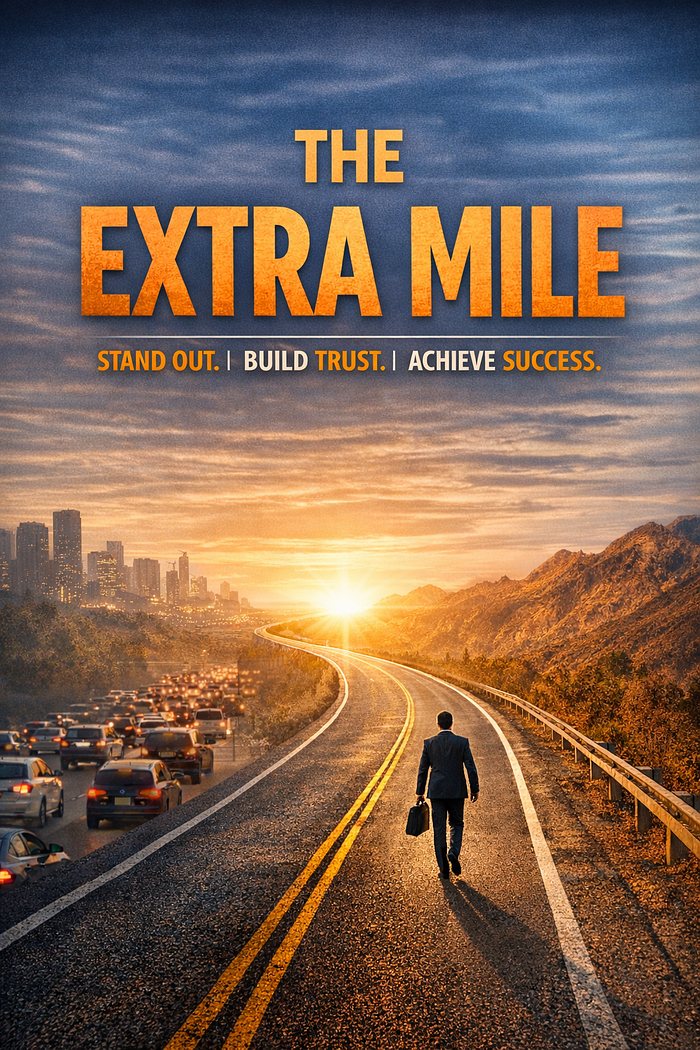
There’s No Traffic on the Extra Mile: The Science of Standing Out in Business
“Going the extra mile” can sound like a motivational poster — until you look at what research says about how trust, loyalty, and long-term performance are actually built.
In most markets, the baseline has become “good enough”: fast replies when convenient, average follow-through, minimal personalization, and inconsistent delivery. That’s why the extra mile is rarely crowded — most people stop at what’s required.
But the business world doesn’t reward intention. It rewards outcomes. And outcomes tend to follow the people and teams who consistently deliver beyond the minimum.
The extra mile has a scientific name: discretionary effort
In organizational psychology, extra-mile behavior is often studied as Organizational Citizenship Behavior (OCB) — voluntary actions that aren’t formally required but improve effectiveness (helping, being proactive, being dependable, protecting quality, etc.).
What’s compelling is that OCB isn’t just “nice.” A major meta-analysis in the Journal of Applied Psychology (Podsakoff and colleagues) found meaningful relationships between these extra-role behaviors and multiple outcomes at both individual and organizational levels.
In plain business terms: the extra mile tends to correlate with the kinds of results leaders care about — better performance, stronger teams, and healthier operations.
Why “average” is crowded — and why excellence is scarce
Most people don’t avoid the extra mile because they’re lazy. They avoid it because it costs something:
- • Attention to detail (mentally demanding)
- • Follow-through (time-consuming)
- • Ownership (emotionally demanding)
- • Learning (ego-demanding)
When effort is optional, many default to the minimum that feels safe. That’s why you’ll see crowded competition at the baseline — and surprisingly little competition at consistent excellence.
The Service-Profit Chain: extra effort becomes profit through loyalty
Harvard Business research on the Service-Profit Chain connects internal quality and employee capability to customer value, satisfaction, loyalty, and ultimately growth and profitability.
The takeaway for business owners and teams is simple: when customers feel cared for and consistently supported, they stay longer, buy more, and refer others. The “extra mile” is often what creates that felt experience — especially when competitors deliver the same product features but a worse experience.
Trust is the real compounding asset
Relationship marketing research highlights trust and commitment as central drivers of durable customer relationships. Morgan and Hunt’s well-known Commitment-Trust Theory argues that trust and commitment are key to successful long-term exchanges.
This matters because the extra mile isn’t just extra work — it’s signal strength. When you follow up unprompted, keep promises, clarify expectations, and make the customer feel safe, you aren’t merely being helpful. You’re building a trust advantage that competitors can’t copy quickly.
Why the extra mile works: it compounds quietly
The extra mile is powerful for the same reason investing is powerful: compounding.
A customer rarely becomes loyal because of one big moment. Loyalty is usually built through many small interactions: responsiveness, clarity, consistent delivery, and “they really handled that well.” That pattern becomes reputation. Reputation becomes repeat business.
And on the internal side, excellence compounds as well. Research on habit formation shows that consistent behaviors become more automatic over time — one influential study found a median of 66 days for habits to reach high automaticity, with wide variation.
Translation: the extra mile feels hardest at the beginning — right before it starts feeling natural.
What “going the extra mile” looks like in modern business
Going the extra mile isn’t perfectionism or burnout. It’s targeted, repeatable behaviors that create outsized impact:
1) Better follow-through than your competitors
Most businesses lose trust in the gaps: unreturned messages, vague timelines, unclear next steps. Extra mile = fewer gaps.
2) Proactive clarity
You don’t wait for confusion; you prevent it. You set expectations, confirm details, and reduce friction before it becomes a support issue.
3) Small personalization that feels big
Remembering preferences, using a customer’s name, referencing their goal — tiny touches that create “they get me.”
4) Consistency over intensity
A reliable “B+ every day” often beats occasional “A+” followed by silence.
5) Ownership when something goes wrong
Customers don’t expect perfection, but they do remember how you handle problems. Extra mile = fast acknowledgement, clear solution, and calm leadership.
A practical framework: the “Extra Mile” operating system
If you want extra-mile results without chaos, build it into a system:
Step 1: Choose one “signature behavior”
Pick the one thing customers will consistently feel from you:
- • fastest response times
- • clearest instructions
- • strongest onboarding
- • best follow-up
- • most helpful check-ins
Step 2: Define your “minimum excellence standard”
Write your non-negotiables:
- • Reply within X hours
- • Deliver within X days
- • Confirm next steps every time
- • Always provide one helpful resource
Step 3: Measure what you want to improve
If you don’t track it, you can’t improve it. Track:
- • response time
- • follow-up completion rate
- • customer satisfaction notes
- • repeat purchases/referrals
Step 4: Protect energy with boundaries
Extra mile is not “always available.” It’s “always dependable.” Build time blocks, templates, and automation where appropriate so excellence stays sustainable.
The motivational truth: excellence is a competitive advantage because it’s uncommon
The extra mile isn’t crowded because it demands discipline and ownership. Most people won’t do it consistently. That’s exactly why it works.
If you want outstanding results, don’t ask, “What’s the least I can do?” Ask, “What would make me undeniably valuable?” Then do that — daily, consistently, and sustainably.
Because in business, the extra mile isn’t a slogan...It’s a strategy.
It’s one of the most reliable ways to earn trust, build loyalty, and create a reputation that keeps paying you back.
Special Offer Read Now!
Click the Link to Get A Free Funnel System That Generates LEADS & Sends 30 Daily Emails That Promotes Your Primary Business Automatically!